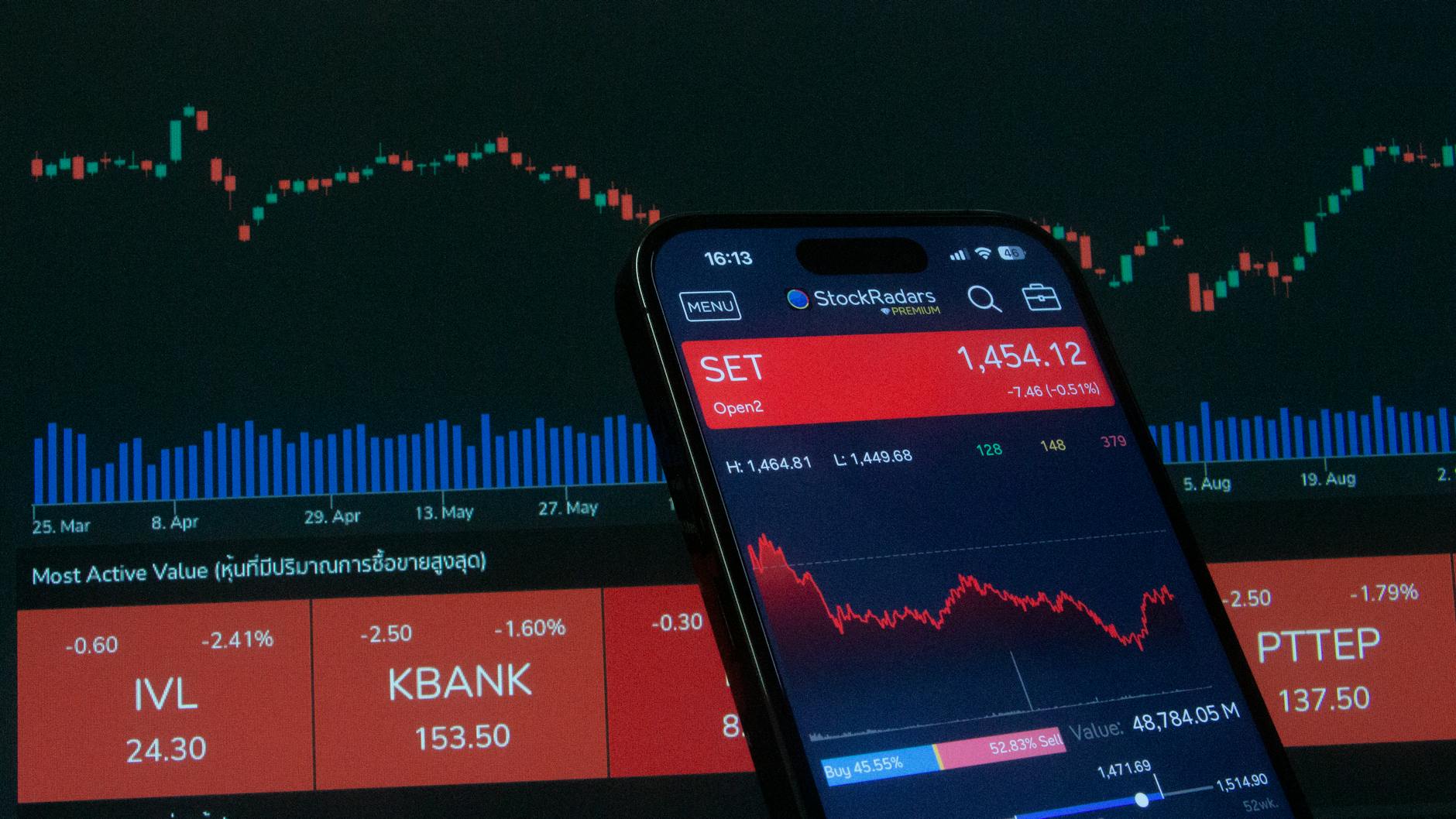
What is an index fund? It is a type of investment fund that tracks a specific market index. Think of it as a basket that holds many stocks or bonds at once. Instead of picking individual companies to invest in, an index fund automatically buys all the companies in a given index. For example, an S&P 500 index fund holds shares in 500 of the largest U.S.
companies. This makes investing simple and affordable. You do not need to be an expert to get started. Understanding what is an index fund is one of the most important steps for anyone looking to grow their savings beyond a traditional bank account. Index funds have become wildly popular because they charge very low fees. They also tend to perform better than most actively managed funds over the long term. If you have money sitting in a savings account earning modest interest, learning what is an index fund could open the door to stronger long-term growth.
How Does an Index Fund Work?
An index fund works by copying a market index. A market index is simply a list of companies grouped together by size, industry, or region. The S&P 500 is the most well-known index. It includes companies like Apple, Amazon, and JPMorgan Chase. When you buy shares of an S&P 500 index fund, your money is spread across all 500 companies automatically.
Here is a concrete example. Say you invest $1,000 into a total stock market index fund with an expense ratio of 0.03%. That means you pay just $0.30 per year in fees. If that fund returns an average of 10% per year, your $1,000 would grow to roughly $2,594 after 10 years. Compare that to a savings account earning 4.5% APY, where the same $1,000 would grow to about $1,553. However, keep in mind that index fund returns are not guaranteed and can fluctuate year to year.
The fund manager does not try to beat the market. They simply match it. As a result, costs stay extremely low. This is the core appeal when people ask what is an index fund. It offers broad diversification with minimal effort.
What Is an Index Fund — Key Facts
There are several types of index funds available to everyday investors. Each one tracks a different slice of the market. The table below breaks down the most common options.
| Index Fund Type | What It Tracks | Typical Expense Ratio | Example Fund |
|---|---|---|---|
| S&P 500 Index | 500 largest U.S. companies | 0.03% | Vanguard VOO |
| Total Stock Market | Entire U.S. stock market | 0.03% | Vanguard VTI |
| International Index | Companies outside the U.S. | 0.07% | Vanguard VXUS |
| Bond Index | U.S. investment-grade bonds | 0.03% | Vanguard BND |
| Total World Index | Global stocks (U.S. + international) | 0.07% | Vanguard VT |
According to the SEC’s guide to mutual funds, expense ratios are one of the most important factors to consider when choosing a fund. Typically, index funds charge between 0.03% and 0.20% per year. Actively managed funds often charge 0.50% to 1.00% or more. That difference adds up significantly over decades.
You can buy index funds through a brokerage account at firms like Fidelity, Vanguard, or Charles Schwab. Many of these brokerages charge no commissions on trades. In most cases, you can start investing with as little as $1.
Why an Index Fund Matters for Your Money
Understanding what is an index fund matters because it gives you a clear path to long-term wealth building. A high-yield savings account is great for emergency funds and short-term goals. However, for money you will not need for five or more years, index funds historically deliver stronger returns. The S&P 500 has averaged roughly 10% annual returns over the past several decades, according to data from the Federal Reserve.
For readers focused on bank bonuses, here is a useful connection. Many bank bonus offers require direct deposit or minimum balance requirements. Once you have earned your bonus and met the requirements, consider moving surplus cash into an index fund. For example, if you earn a $300 bank bonus and invest it in an S&P 500 index fund, that $300 could grow to about $778 in 10 years at a 10% average return. That turns a one-time bonus into long-term growth.
Knowing what is an index fund also helps you make smarter choices about where to keep different portions of your money. Keep your emergency fund in an FDIC-insured savings account. Put your long-term savings to work in low-cost index funds. This two-bucket approach is what most financial educators recommend.
Common Mistakes and Misconceptions
Mistake 1: Thinking index funds are risk-free. They are not. Index funds hold stocks, and stock prices can drop. In 2022, the S&P 500 fell about 19%. However, historically it has always recovered over longer periods. The key is staying invested and not panic-selling during downturns.
Mistake 2: Believing you need thousands of dollars to start. Many people never learn what is an index fund because they assume it requires a large sum. In reality, most brokerages let you buy fractional shares. You can start with $5 or $10. Typically, the hardest part is simply opening an account.
Mistake 3: Paying high fees for actively managed funds. Some investors pay 1% or more in annual fees for funds that rarely outperform index funds. According to FINRA, even small fee differences can cost you tens of thousands of dollars over a lifetime. For example, on a $10,000 investment growing at 8% per year, a 1% fee costs you about $30,000 more than a 0.03% fee over 30 years.
Mistake 4: Confusing index funds with individual stocks. When people first ask what is an index fund, they sometimes think it works like buying a single stock. It does not. An index fund gives you instant diversification across hundreds or thousands of companies. This dramatically reduces your risk compared to owning just one or two stocks.
Frequently Asked Questions
Is an index fund safe for beginners?
Yes, index funds are widely considered one of the best starting points for new investors. They offer broad diversification and very low fees. However, all investments carry some risk, so only invest money you will not need in the short term.
What is an index fund expense ratio, and why does it matter?
An expense ratio is the annual fee a fund charges, expressed as a percentage. For example, a 0.03% expense ratio means you pay $0.30 per year for every $1,000 invested. In most cases, lower expense ratios mean more of your money stays invested and growing.
Can I lose money in an index fund?
Yes, you can lose money in the short term. Stock markets go up and down. However, historically, broad market index funds have delivered positive returns over any 20-year period. Typically, the biggest risk is selling during a downturn instead of staying the course.
Explore More Banking Guides
Looking for the best bank bonuses, savings rates, and financial strategies? Browse our complete library of banking guides and find the right account for you.
(paid link)
Official Sources & Resources
For verified information on banking regulations and consumer protection:
- FDIC (Federal Deposit Insurance Corporation): fdic.gov
- CFPB (Consumer Financial Protection Bureau): consumerfinance.gov
- Federal Reserve: federalreserve.gov
- NCUA (National Credit Union Administration): ncua.gov
- SEC (Securities and Exchange Commission): sec.gov
Content last reviewed April 2026. If you notice any outdated information, please contact us.